Built in 1810 as a merchant’s summer retreat, Rockland Mansion overlooks the banks of the Schuylkill River from what is now East Fairmount Park. One of many historic houses – or “park charms” – that dot the park’s landscape, Rockland’s architecture is a reflection of the political ideals of Early America, and a showcase for the skilled craftsmanship in Philadelphia at the time.
Last fall, Fairmount Park Conservancy’s skilled historic preservation team spent several weeks completing repairs to deteriorating parts of the building. Using both traditional and modern carpentry, masonry and finishing techniques, the team worked to preserve, recreate and protect iconic elements of the building’s exterior – thereby safeguarding this treasure of American architecture, so it may be seen, studied, and marveled at for generations to come.
Rockland’s History and Architecture
Originally a private estate, Rockland was purchased by the City of Philadelphia in 1876 in an ongoing campaign to acquire land and houses along the Schuylkill River and develop a public park as a buffer to protect the local water supply.
Rockland’s architectural style is a visual representation of New Republic ideology. It is profoundly simple, stark, elegant and deeply influenced by ancient Greece – much like the newly minted American government at the time of its construction.
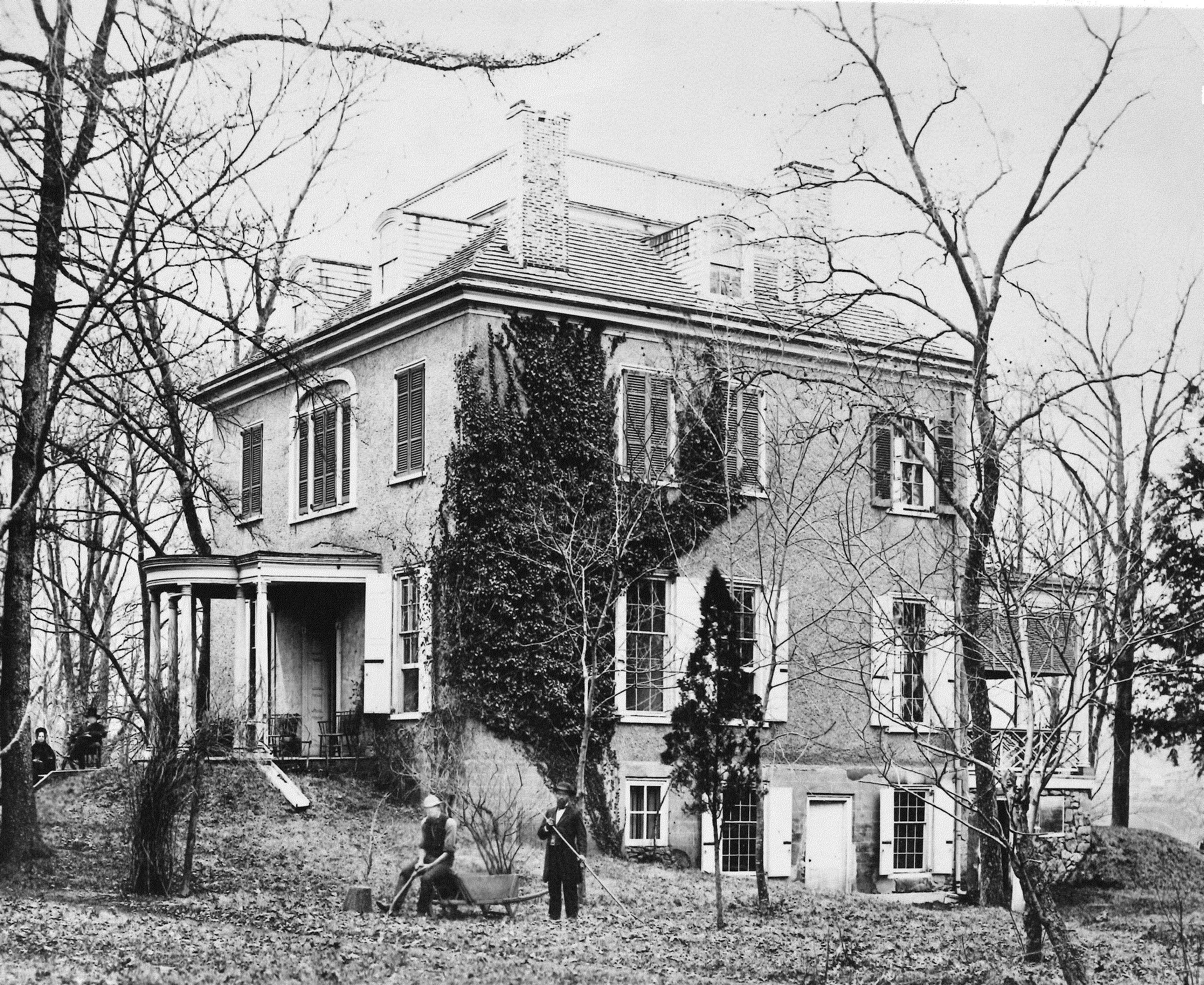
This style is designed to contrast with that of the Old World monarchy, who preferred to boast their wealth through buildings festooned with adornment. Early American architecture, beautifully illustrated at Rockland, was an expression of rebellion and a celebration of newly established freedom. The mansion’s square, 3-bay exterior presents a balanced arrangement of focal points on each floor: colonnade porches on the back and front of the first floor, a Palladian window on the second floor, and dormer windows on the third floor. The recent conservation work on the building focused on restoring these elements.
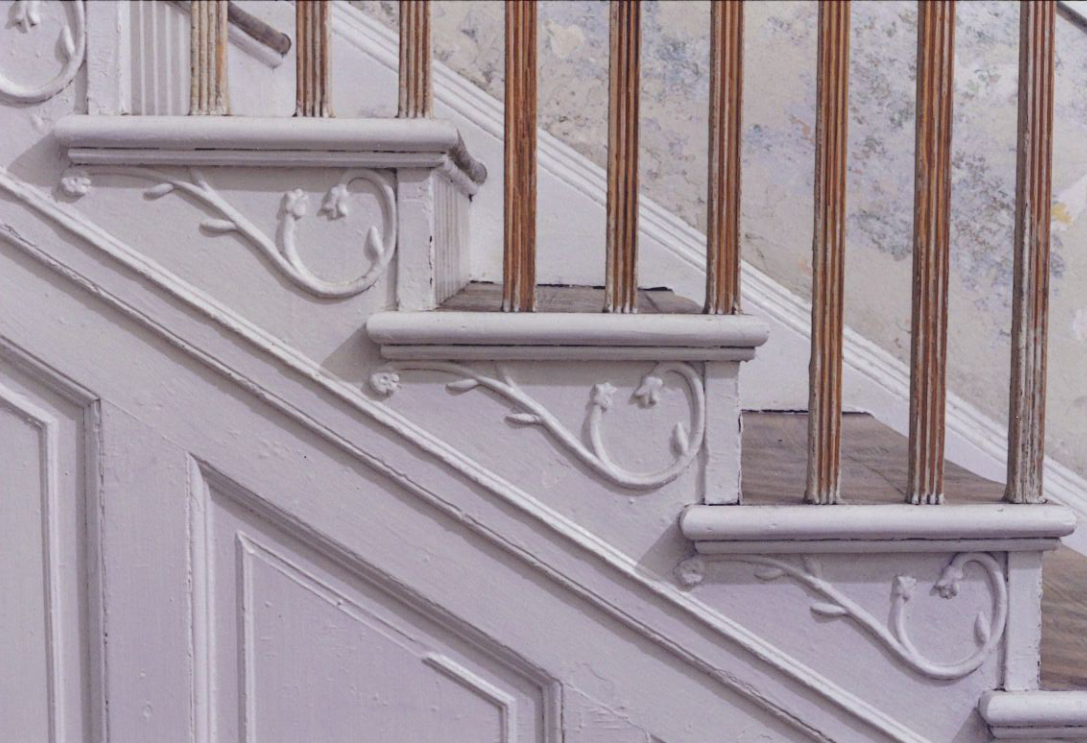
Early 19th-century Philadelphia was known as ‘The Workshop of the World’ and had, by some estimations, the highest concentration of skilled artisans in the world. At that time in Europe, the trades were considered lowly professions that precluded any artisan from the opportunity to become a gentleman. But, in America, true social mobility was possible and craftspeople were venerated – as illustrated in the life of Benjamin Franklin, who started his career as a printer. At Rockland Mansion, carpenters invested countless hours into the building, and their skills are evident in the building’s precise execution. Reeded column details are seen throughout, from the large exterior columns to the interior millwork of window casings, fireplace surrounds and staircase spindles. The Fairmount Park Conservancy team engaged in extensive research and careful execution to preserve the work of these master craftsmen.
Repairs and Restoration
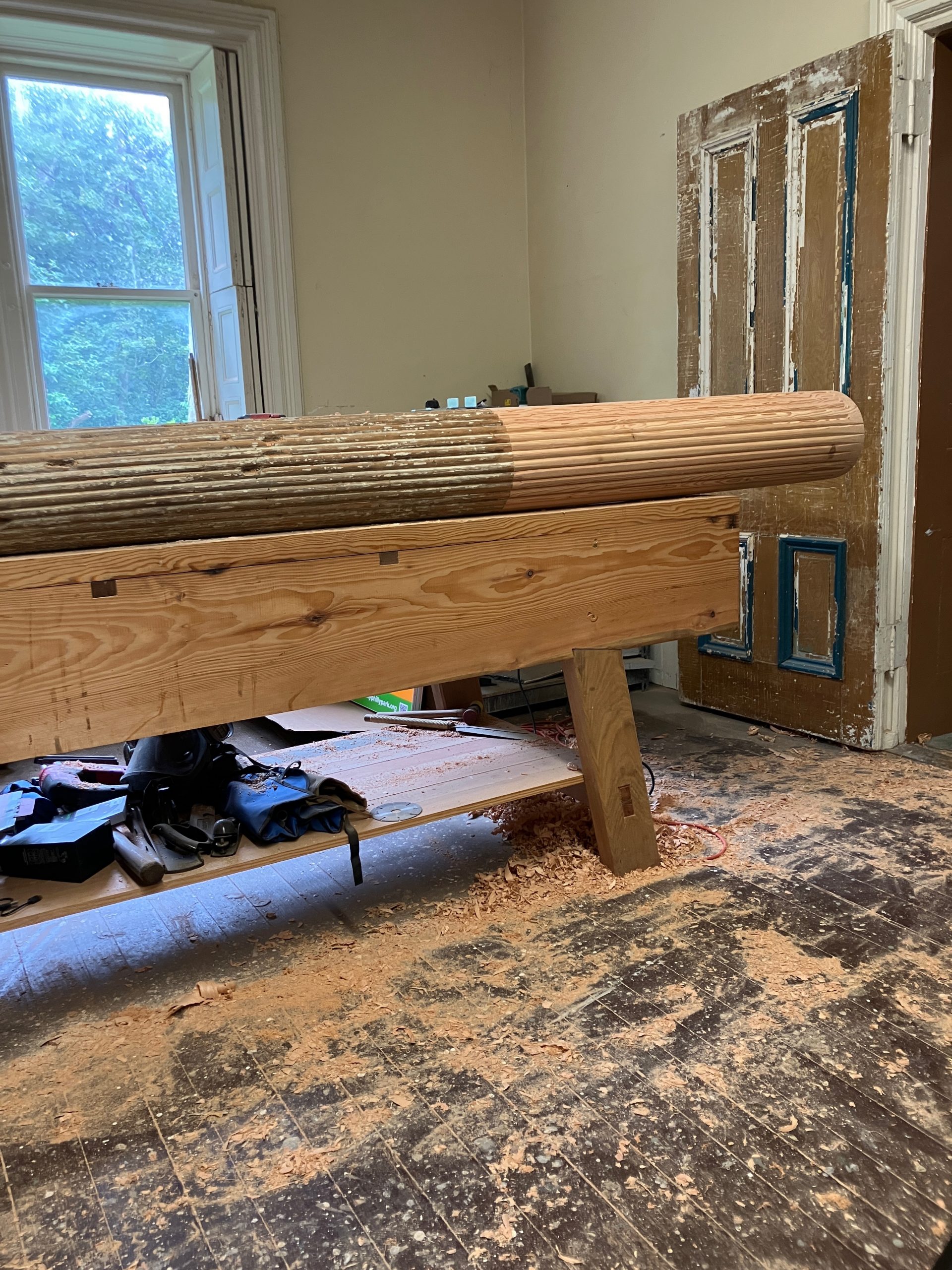
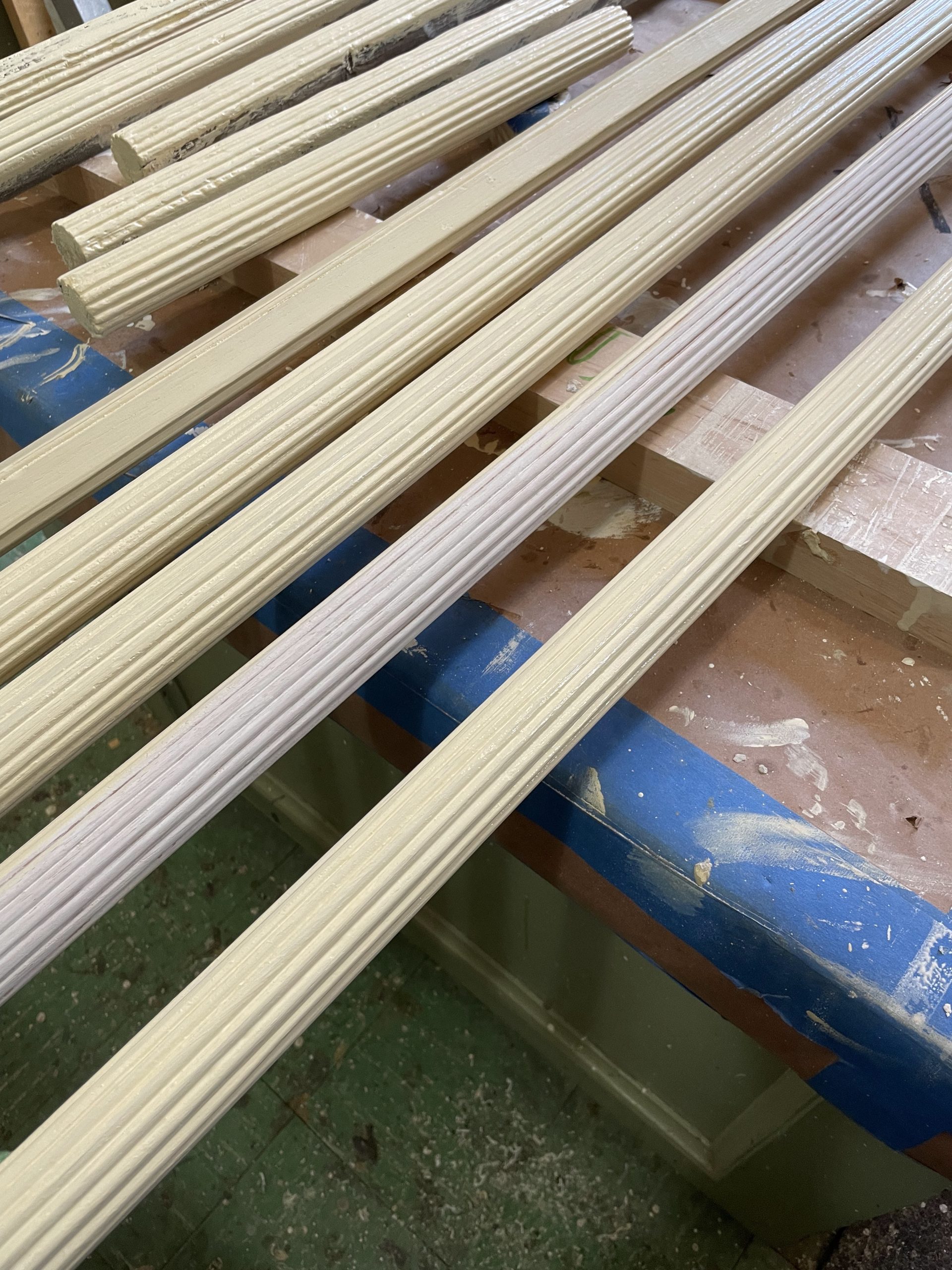
The newly completed preservation work on Rockland includes repairs to five of the first floor columns. Conservation Technician Gannon Blair replaced a four-foot section of a column and its base. To make the replacement, the team removed the damaged column, brought it back to the shop, and cut off the damaged portion. Gannon then created a wood cylinder that fit onto the remaining portion of the original column. From there, he plotted the locations of each column reed, using careful geometry to replicate the slightly flared shape. Each depression between the reeds was then roughly cut with a router on a custom jig and shaped using handmade tools and extensive sanding. The base was created by first making a series of hexagons, which were then made circular, routed to match the original base, and restacked in order.

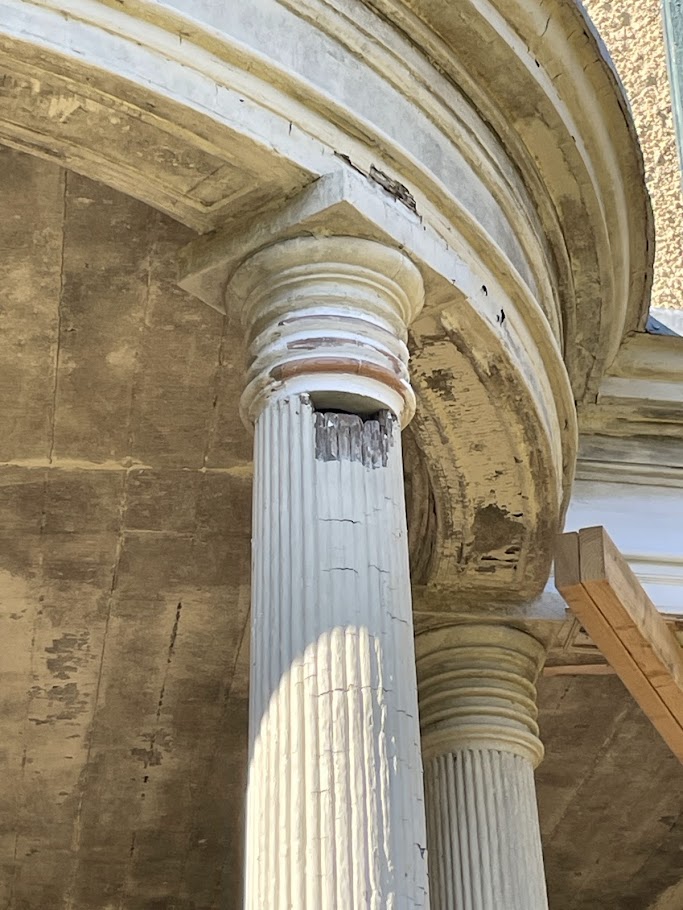
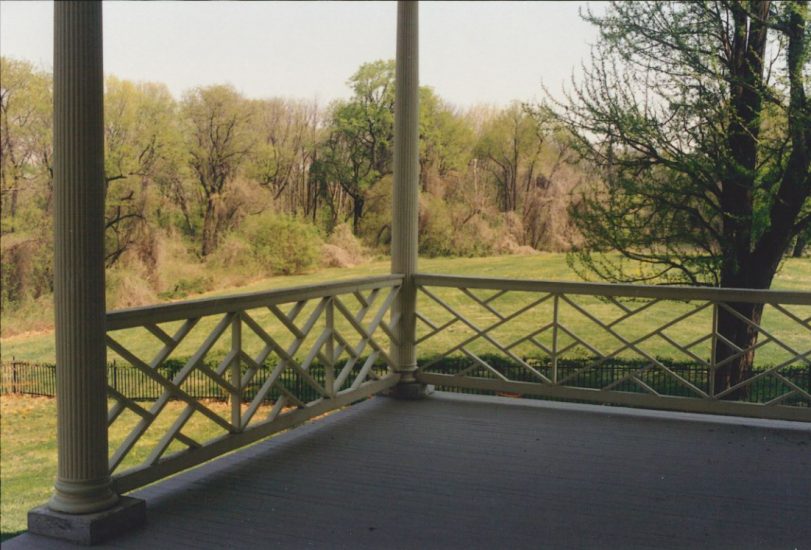
Additional first floor repairs included stabilizing sections of Chinese Chippendale railing on the back porch, replacing rotted boards encasing the porch, installing new metal flashing to protect the masonry, repairing and repainting the soffit of the front portico.
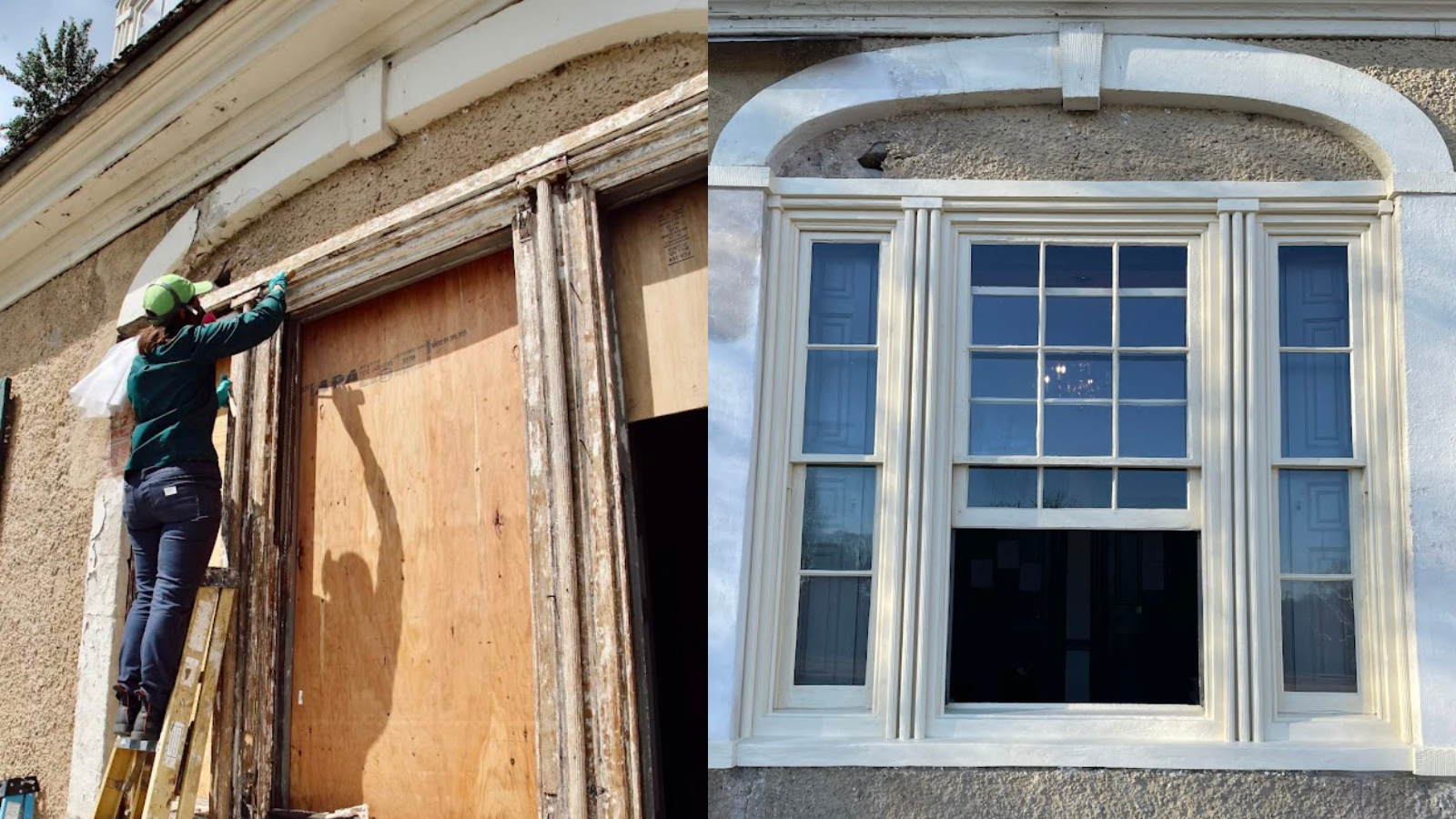
On the second floor, the Palladian window required full restoration. This three-part window is the focal point of the front of the building and the most detailed. Flanking each window are a series of miniature reeded columns, echoing the larger ones on the portico below. These were badly damaged by wood rot and carpenter bees, and five of them had to be completely replaced. After removing 15 layers of paint, Conservation Technician Jessie Renew performed dutchman repairs to the window casing, replacing rotted parts of the sill and jamb with tightly-fitting wood pieces milled from appropriate rot-resistant lumber. She then recreated the columns with the same technique Gannon used to repair the larger column – first by creating round blank pieces, then routing the depressions between each column using a specially made jig and finally shaping the reeds with custom hand tools and lots of detailed sanding. After installing the new mini columns and repainting the entire window casing, significant repairs to the stucco surround were completed, including rebuilding a section of the back-up brick that had deteriorated due to water damage.
To finish off the project on the third floor, Gannon and Conservation Manager Andrew Staples suspended themselves from the house’s widow’s walk to replace all the cheek wall siding on the dormer windows. This last detail capped off a challenging and satisfying project for the team, and a much-needed renewal for Rockland’s iconic exterior.
Learn more about our conservation work
Happy Preservation Month! Philadelphia parks are teeming with history, and our architectural conservation team works year-round to preserve the local gems that tell our city’s story. Check out our Architectural Conservation Services page to learn more.